Choosing a clutch kit 240mm is not simply a matter of matching diameter. The “7 Clutch Kit 240mm Buying Tips You Need to Know” guide focuses on fit, durability, and practical verification. A 240mm disc may look correct on a workbench, yet its spline count, hub profile, pressure-plate height, and release-bearing design can still differ. Small differences matter.
Market conditions make careful selection more important. S&P Global Mobility reported that the average age of U.S. vehicles reached about 12.6 years in 2024. Older vehicles often need stronger maintenance decisions, especially when traffic, towing, or repeated hill starts increase clutch heat. The Auto Care Association’s 2024 Joint Channel Census also links vehicle age and miles driven with continued aftermarket demand. These reports do not prove that every older vehicle needs a premium kit. They do show why informed replacement decisions deserve attention.
Start with the vehicle identification number, not memory. Compare the original part number with the manufacturer’s catalog. Check the flywheel surface, crankshaft pilot bearing, and hydraulic release system before ordering. A new clutch cannot correct a warped flywheel. It may even expose one.
Think beyond price. Compare torque capacity, friction material, spring construction, warranty terms, and supplier traceability. Some low-cost kits perform well. Others create noise, shudder, or early slip. That distinction is easy to miss online. Even experienced buyers can overlook release-bearing compatibility when chasing a quick discount. These seven tips are designed to slow that decision down, using manufacturer specifications, workshop logic, and evidence-based checks rather than attractive packaging alone.
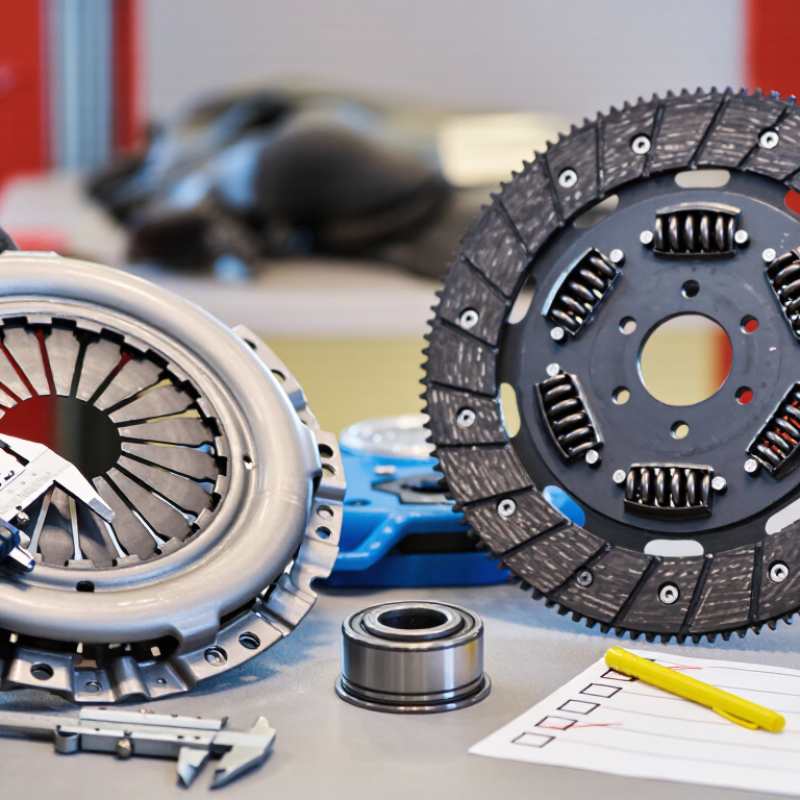
A 240mm clutch kit refers mainly to the friction disc diameter, not the complete clutch assembly. The kit usually includes a friction disc, pressure plate, and release bearing. Some packages also provide a pilot bearing, alignment tool, and mounting bolts. Contents vary, so inspect the parts list carefully.
Tips: Measure the old disc before ordering. Check the spline count, hub profile, and pressure plate bolt pattern. Confirm compatibility with the engine, transmission, flywheel, and release system. A 240mm disc may fit the diameter but still fail because its hub depth differs. Small errors matter.
During installation, compare both discs side by side. The hub should face the correct direction, and the friction surfaces must stay clean. I would also inspect the flywheel for heat spots, grooves, or cracks. Reusing damaged surfaces can cause shudder, even with a new kit. Do not guess the bolt torque. Use the vehicle’s service data and tighten bolts gradually in a crisscross pattern. An alignment tool helps, but it does not correct a warped flywheel. I once overlooked release-fork wear during a parts check; the new clutch worked poorly afterward. That mistake was avoidable.
Checking compatibility matters more than the 240mm diameter. That number usually describes the clutch disc’s outside diameter. It does not confirm the correct spline count, pressure plate, flywheel, or release bearing. S&P Global Mobility reported that the average U.S. light vehicle age reached 12.6 years in 2024. The Auto Care Association’s 2024 Factbook also recorded nearly 291 million light vehicles in operation. Older vehicles often have overlapping engines, transmissions, and production updates. Small differences can cause serious fitment problems.
Tips: Match the vehicle year, engine code, transmission type, disc spline count, flywheel diameter, pilot bearing, and actuation system. Check the VIN when possible. Compare the existing flywheel surface and bolt pattern, not only an online catalog image. A 240mm kit may fit one transmission version but fail on another. I still recheck measurements. Catalog data can be incomplete.
Measure the disc carefully with calipers. Confirm whether the vehicle uses a solid or dual-mass flywheel. Inspect the release mechanism for hydraulic or cable operation. A mismatched bearing can create noise, poor disengagement, or incomplete gear selection. SAE clutch testing standards emphasize repeatable engagement and durability measurements, but real-world installation conditions still matter. Rust, a warped flywheel, or incorrect bolt torque can change the result. Fitment is not a guess. It is a chain of verified details.
A 240mm clutch kit should be judged by material, design, and usable performance, not diameter alone. Organic friction material offers smoother engagement and lower noise for daily driving. Ceramic and metallic compounds tolerate more heat, but they can feel sharper and accelerate flywheel wear. SAE J661 evaluates friction materials by cold and hot friction grades, with the “F” range representing approximately 0.35–0.45 friction coefficient. That number matters, but it does not predict every vehicle’s behavior.
Design changes the driving experience. A sprung hub can reduce gear rattle and soften torque pulses. A rigid hub transfers power more directly, yet it may feel harsh in traffic. Segmented friction facings can improve heat release and cleaning during repeated engagement. For a 240mm disc, check spline count, cover load, release travel, and flywheel compatibility. A perfect material still fails with incorrect geometry.
Performance reports often separate torque capacity, thermal fade, wear, and engagement quality. A 2023 automotive clutch market analysis projected steady global growth through the decade, driven partly by higher drivetrain loads and commercial vehicle demand. However, market growth does not prove a kit suits your car. SAE testing uses controlled conditions, while hills, towing, and stop-start traffic create different heat cycles. The honest mistake is choosing the highest advertised capacity. It may be unnecessary. Compare the manufacturer’s measured torque rating with your engine’s real peak torque, then leave a sensible margin.
| Buying Tip | What to Compare | Typical Options or Specifications | Effect on Performance | Recommended Use |
|---|---|---|---|---|
| 1. Confirm the 240mm fitment | Measure the friction diameter and verify the spline, hub profile, bolt pattern, pilot bearing, release bearing, and flywheel compatibility. | A “240mm” clutch normally refers to the nominal friction diameter, but the outer diameter, spline count, spline diameter, and cover dimensions can vary. | Correct diameter alone does not guarantee installation or proper disengagement. | Every replacement application, especially when changing the flywheel or transmission. |
| 2. Select the friction material carefully | Compare organic, ceramic, metallic, and aramid-based friction facings. | Organic: smooth engagement and low noise. Ceramic or metallic: high heat resistance and aggressive engagement. Aramid-based: progressive engagement with good wear resistance when properly matched. | Friction material influences heat tolerance, launch behavior, pedal feel, noise, wear rate, and drivability. | Organic for street use; ceramic or metallic for repeated high-temperature use; aramid-based materials for a smoother performance-oriented compromise. |
| 3. Compare disc design and sprung-hub construction | Check sprung versus rigid hubs, torsion springs, hub size, facing segments, and cushioning features. | A sprung hub absorbs torsional vibration; a rigid hub transfers torque more directly. Segmented facings can improve heat release but may engage more sharply. | Sprung hubs generally improve refinement and reduce gear-rattle risk, while rigid or highly segmented designs can provide faster torque transfer. | Use a sprung hub for most road cars. Consider a rigid hub only when the drivetrain is designed for its harsher response. |
| 4. Evaluate clamp load and torque capacity | Compare cover clamp load, friction coefficient, usable friction radius, and the engine’s peak torque. | Torque capacity depends on clamp load, friction material, mean effective radius, the number of friction surfaces, and the safety margin. Published capacity figures are application-specific, not universal. | Higher capacity can prevent slip, but excessive clamp load may increase pedal effort and stress the hydraulic system, release bearing, and crankshaft thrust system. | Choose a kit with a reasonable reserve above measured or documented engine torque rather than selecting the highest rating available. |
| 5. Inspect the pressure-plate design | Compare diaphragm-spring geometry, cover rigidity, heat treatment, friction surface finish, and self-adjusting features. | A diaphragm-spring cover is common in modern passenger vehicles. Some designs maintain more consistent clamp load as the disc wears, while non-adjusting designs may provide a simpler setup. | Cover design affects release effort, clamp-load consistency, heat recovery, and resistance to distortion. | For daily driving, prioritize consistent release effort and thermal stability over maximum clamp load. |
| 6. Match the performance level to the operating conditions | Consider vehicle weight, traffic conditions, towing, hill starts, track use, launch frequency, and engine modifications. | Standard: factory-like engagement and comfort. Heavy-duty street: increased torque reserve with manageable pedal effort. Competition: high heat capacity and rapid engagement, usually with more noise and reduced comfort. | A clutch designed for competition may perform poorly in traffic because it can be abrupt, noisy, and less tolerant of slipping during low-speed maneuvers. | Select the lowest performance level that safely handles the vehicle’s actual torque and heat demands. |
| 7. Check the complete kit and break-in requirements | Confirm whether the kit includes the disc, pressure plate, release bearing, alignment tool, pilot bearing or bushing, and installation hardware. | Replace worn related parts at the same time when required. The flywheel should be inspected for cracks, hot spots, runout, and correct resurfacing specifications. | Correct installation and bedding reduce clutch judder, premature glazing, uneven wear, and early slip. | Follow the kit’s break-in instructions; many street clutch facings require several hundred gentle engagement cycles before full-load use. |
A 240mm clutch kit should be judged by more than its advertised diameter. Examine the friction disc closely. Its rivets should sit evenly, and the friction material should show a clean, consistent surface. The pressure plate must have a flat contact face and firm diaphragm fingers. Uneven fingers can create engagement problems. I have seen inexpensive kits look acceptable in the box, then reveal rough bearing movement during installation. That small detail matters.
Check every included component before fitting the kit. A complete package may contain the friction disc, pressure plate, release bearing, pilot bearing, alignment tool, and replacement bolts. Missing hardware can delay the repair or encourage unsafe substitutions. The alignment tool should match the input shaft accurately. A loose fit is not good enough. Compare the kit’s dimensions with the vehicle’s service data, including spline count and pilot diameter. Packaging errors happen, even with reputable suppliers.
Brand support also deserves careful evaluation. Look for clear warranty terms, installation guidance, torque specifications, and accessible technical assistance. Reliable support should explain compatibility questions without vague promises. Parts availability matters too, especially when a replacement bearing is needed later. I prefer documented testing information, although some sellers provide very little. That makes comparison difficult. My judgment can still be wrong, so I recheck measurements before ordering. A quiet bearing, precise fit, and complete documentation often reveal more than a polished product description.
A practical, brand-neutral evaluation framework for comparing 240 mm clutch kits by quality, support, fitment, and included components.
The percentages represent a buyer-oriented scoring model. Confirm vehicle fitment, clutch diameter, spline count, release-bearing compatibility, and installation requirements against the vehicle service information before purchasing.
A 240mm clutch kit deserves more than a quick price comparison. Tip one: confirm the exact diameter, spline count, and engine code. Tip two: verify flywheel compatibility before ordering. S&P Global Mobility reported that the average U.S. vehicle reached 12.6 years in 2024. Older vehicles often need surrounding parts checked, not just a new clutch.
Tip three: check what the kit includes. A release bearing, alignment tool, or pilot bearing can prevent extra purchases. Tip four: estimate installation costs honestly. Access may require removing the transmission, and labor can exceed the kit price. Tip five: inspect the flywheel, hydraulic system, and rear main seal while access is available. Workshop inspections often find these hidden costs. Skipping them can backfire.
Tip six: compare warranty length, coverage, and claim requirements. Keep invoices and installation records. AAA’s 2024 Your Driving Costs study estimated maintenance, repair, and tire expenses at 9.83 cents per mile. That makes durability financially relevant, especially for high-mileage drivers. Tip seven: compare long-term value, not the lowest checkout total. A stronger friction material may suit towing, but it can feel less comfortable in traffic. A softer pedal is not always better. I would still recheck the vehicle’s real workload before choosing. Ratings can look impressive, yet daily stop-and-go driving exposes weak installation work quickly.
An exceptional record of quality and service for 35+ years.
© 2026 Excell Battery Co. All rights reserved.Privacy Statement