
Choosing the right 12v battery pack is less simple than comparing capacity numbers. A compact pack may start a motorcycle, power a fish finder, or run emergency lights. Yet those tasks demand different discharge rates, connectors, protection circuits, and charging methods.
The International Energy Agency reported that battery demand across the energy sector reached about 750 GWh in 2023, increasing roughly 40% from the previous year. BloombergNEF also reported an average lithium-ion pack price of $115 per kWh in 2024, a 20% annual decline. These figures show a growing battery market, but they do not make every 12-volt product suitable for every application. A lower price can hide weaker cells, limited thermal protection, or an unsuitable charger.
Safety matters.
This guide compares seven battery packs for camping, vehicles, backup power, electronics, and professional equipment. We examine usable capacity, peak current, cycle claims, recharge time, weight, connector quality, and warranty support. We also consider relevant safety expectations, including protections associated with UL 2054 and battery testing guidance under IEC 61960. Manufacturer claims still require careful checking. Some capacity figures are measured under ideal conditions, not beside a cold tent or a dusty workbench.
I have included practical trade-offs rather than one universal winner. A lightweight lithium pack may outperform lead-acid for portability, while a rugged sealed battery may remain preferable for certain fixed installations. The “best” choice can change quickly. That is the point of this comparison: to match each 12v battery pack with a real need, not just an impressive specification sheet.
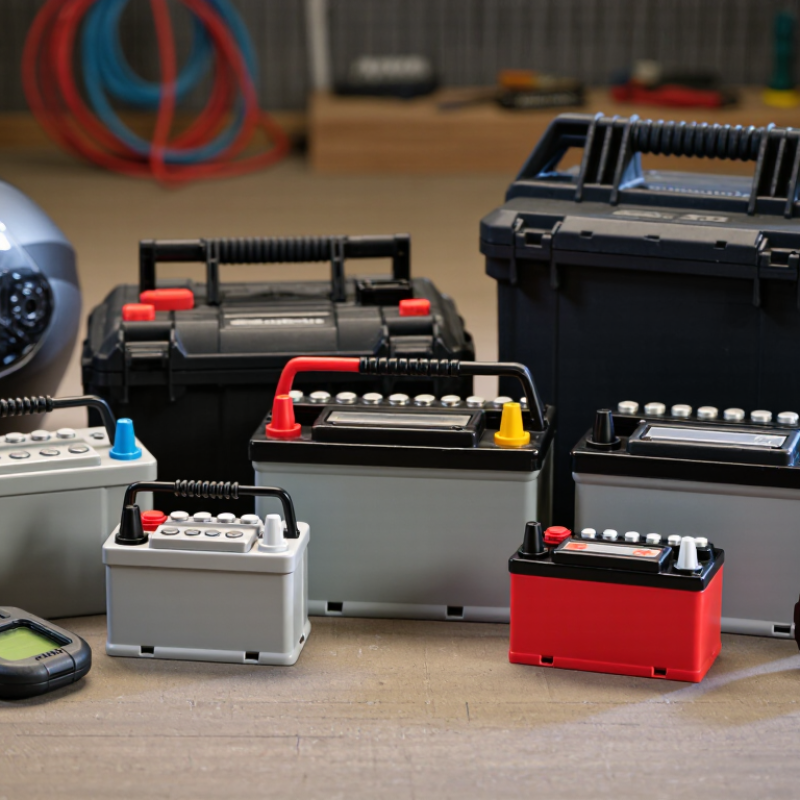
What Is a 12V Battery Pack and How Does It Work?
A 12V battery pack stores chemical energy and releases it as direct current. Its “12V” rating is nominal, not constant. A lead-acid pack commonly uses six cells, each producing about 2.1 volts. A lithium iron phosphate pack usually uses four cells and measures about 12.8 volts. The battery management system monitors voltage, temperature, and charging limits. It also disconnects the pack during unsafe conditions.
Capacity is measured in ampere-hours, or Ah. A simple estimate uses voltage multiplied by capacity: a 12V, 20Ah pack stores roughly 240 watt-hours. Real output is lower because conversion losses, temperature, and aging reduce usable energy. Small packs may power lights, sensors, or emergency equipment. Larger packs can run portable refrigerators, communication devices, or backup systems.
According to the International Energy Agency’s Global EV Outlook 2024, global electric-car sales reached almost 14 million in 2023. Many electric vehicles still use low-voltage auxiliary systems, showing why 12V technology remains relevant. BloombergNEF reported an average lithium-ion pack price of 139 dollars per kilowatt-hour in 2023, although retail packs cost more because of electronics, casing, testing, and distribution. More capacity is not always better. A heavy pack can become awkward quickly. I have also found that advertised runtime often feels optimistic in cold weather. Check connector type, continuous current, charging method, and protection ratings before choosing a pack. Safety deserves attention. Never mix incompatible chemistries or chargers.
| Recommended Type | Battery Chemistry | Nominal Voltage | Typical Capacity | Approx. Energy | Typical Continuous Output | Approx. Cycle Life | Approx. Weight | Best Use | Important Consideration |
|---|---|---|---|---|---|---|---|---|---|
| Best Overall | LiFePO4 | 12.8 V | 100 Ah | 1,280 Wh | 100 A | 2,000–5,000 cycles | 10–13 kg | RVs, boats, backup power, and daily deep-cycle use | Requires a built-in battery management system and a compatible charger. |
| Best for Low Cost | Sealed AGM lead-acid | 12 V | 100 Ah | 1,200 Wh nominal; about 600 Wh at 50% recommended depth of discharge | 80–100 A for short periods | 200–500 cycles | 27–32 kg | Emergency backup, alarms, mobility equipment, and moderate cycling | Heavy compared with lithium batteries and generally benefits from limited discharge depth. |
| Best for Portable Electronics | High-energy lithium-ion NMC | 11.1–12.6 V | 20 Ah | 222 Wh nominal | 20–40 A | 500–1,000 cycles | 1.5–2.5 kg | Portable monitors, communication equipment, cameras, and compact field devices | Needs protection against overcharge, over-discharge, excessive current, and overheating. |
| Best for High-Power Tools | Lithium-polymer (LiPo) | 11.1 V nominal; 12.6 V fully charged | 5 Ah | 55.5 Wh nominal | 100–150 A, depending on the pack rating | 150–500 cycles | 0.4–0.7 kg | Remote-control systems, robotics, model vehicles, and short high-current loads | Requires careful balancing, fire-safe charging, and storage at a moderate state of charge. |
| Best for Cold-Weather Reliability | LiFePO4 with low-temperature protection | 12.8 V | 50 Ah | 640 Wh | 50 A | 2,000–4,000 cycles | 5–7 kg | Outdoor sensors, remote equipment, camping, and seasonal installations | Charging below 0°C can damage many lithium cells unless the pack includes heating or charge cutoff protection. |
| Best for Standby Systems | Sealed gel lead-acid | 12 V | 33 Ah | 396 Wh nominal; about 200 Wh at 50% recommended depth of discharge | 25–35 A | 300–700 cycles | 10–12 kg | Security systems, telecommunications backup, and low-rate standby applications | Use a charger designed for gel batteries; excessive charging voltage can permanently damage the cells. |
| Best for Simple Replaceable Cells | Nickel-metal hydride (NiMH) | 12 V nominal | 4.5 Ah | 54 Wh nominal | 10–20 A | 500–1,000 cycles | 0.7–1.0 kg | Legacy equipment, educational projects, and applications requiring robust rechargeable cells | Has a higher self-discharge rate and lower energy density than most modern lithium packs. |
| How a 12V battery pack works: A battery pack combines individual cells in series and, when necessary, in parallel. Series-connected cells increase voltage, while parallel-connected cells increase capacity and current capability. The stated voltage is usually nominal; the actual voltage changes with the battery chemistry, state of charge, load, and charging conditions. Usable energy is commonly lower than the nominal watt-hour rating because of recommended depth-of-discharge limits, temperature, age, and conversion losses. | |||||||||




An exceptional record of quality and service for 35+ years.
© 2026 Excell Battery Co. All rights reserved.Privacy Statement