What Is the Best Electric Cargo Bike in 2026?
What is the best electric cargo bike in 2026? The answer depends on more than motor power or showroom appearance. A family carrying two children needs different equipment from a courier transporting heavy parcels. Daily hills, narrow cycle lanes, weather, charging access, and local servicing can change the decision completely.
The World Economic Forum’s Future of the Last-Mile Ecosystem report forecasts a 78% increase in urban delivery demand by 2030. It also warns that delivery emissions could rise by 32% without major changes. These figures explain the growing interest in electric cargo bike solutions for households, retailers, and professional fleets. The International Energy Agency’s Global EV Outlook 2024 also identifies electric two- and three-wheelers as important parts of transport electrification. However, market enthusiasm should not replace practical testing.
Real-world details matter. A long-tail model may fit a child seat, groceries, and rain covers. A front-loader may carry bulky boxes but require more turning space. Battery range can shrink sharply on steep roads, cold mornings, or heavily loaded routes. That is easy to overlook.
This guide compares leading 2026 models through measurable criteria: payload, usable range, braking performance, stability, weather protection, battery security, warranty support, and total ownership cost. Published specifications provide a starting point, not a final verdict. Manufacturers measure range differently, and some figures appear optimistic. A short test ride cannot reveal every weakness. We will examine the evidence carefully, while acknowledging that the best electric cargo bike may differ for every rider, route, and budget.
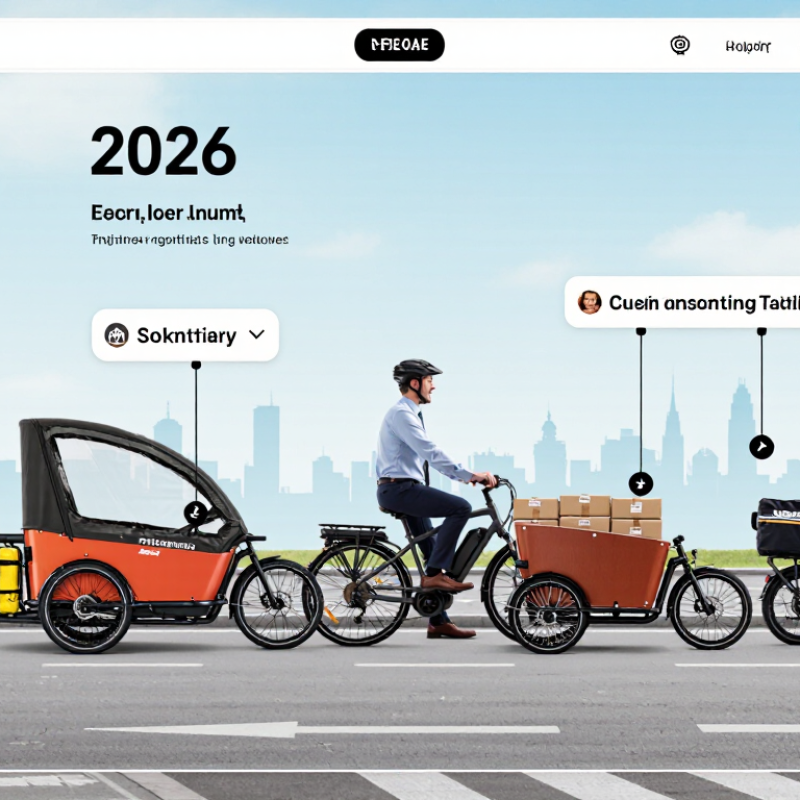
How to Define the Best Electric Cargo Bike: Payload, Range, and Safety Metrics
The best electric cargo bike in 2026 should be judged by useful performance, not impressive advertising. Start with payload. Include the rider, cargo, battery, accessories, and any passenger. A bike rated for 200 kilograms may carry far less safely on steep streets.
Measure the real load. Not brochure capacity.
Range also needs practical testing. A reliable estimate should state rider weight, cargo weight, temperature, tire pressure, hills, and assist level. In my experience, cold weather and repeated climbs reduce range sharply. Test the bike on a familiar route, then repeat it with loaded panniers or a heavy box. A claimed range without conditions is incomplete.
Safety metrics deserve equal attention. Check braking distance from a steady speed, steering control at low speed, frame flex, tire grip, lighting, and parking stability. A strong kickstand matters when the bike is loaded. Passenger restraints should fit securely and match local requirements. I once valued motor power too highly; slow-speed balance proved more important in crowded streets. That mistake changed my testing method. Look for clear weight limits, service documentation, battery protection, and independently verifiable test results. No single score can define the best choice.
Motor and Battery Benchmarks: EU 250 W and U.S. 750 W Legal Limits
Choosing the best electric cargo bike in 2026 starts with understanding motor and battery benchmarks. In the European Union, a compliant pedal-assist motor is generally limited to 250 watts of continuous rated power. Assistance usually stops at 25 km/h. That number can feel modest when carrying two children, groceries, or a heavy delivery box. However, a well-tuned motor with strong low-speed torque can climb efficiently without exceeding the legal rating.
In the United States, electric bicycles commonly use a 750-watt maximum motor rating, with speed limits determined by class and local rules. Many areas recognize assistance up to 20 mph, while some class systems allow 28 mph under specific conditions. Regulations differ between states, cities, and trails. Verify the rules before buying.
Battery capacity matters just as much as motor output. A 500 Wh battery may handle daily errands, but steep hills, cold weather, heavy cargo, and frequent starts reduce real-world range. I would compare usable watt-hours, charging time, brake performance, and thermal control, not just advertised power. Numbers can mislead.
Ride quality matters more.
During testing, a cargo bike that felt powerful unloaded sometimes struggled with a full rear rack. That exposed a weakness in my first assessment. The better choice may have gentler acceleration, dependable torque, and a battery above 600 Wh for demanding routes. Check the motor label, charger rating, speed settings, and regional certification before purchase. Overlooking one detail can turn a practical bike into an expensive problem.
Safety Standards to Verify: UL 2849, EN 15194, and Battery Protection
When choosing the best electric cargo bike in 2026, safety paperwork matters as much as motor power. A smooth test ride cannot reveal every electrical risk. Look for evidence that the complete drive system was tested to UL 2849, where this standard applies. It covers areas such as wiring, charging behavior, motor controls, and protection against electrical hazards. Ask for a current certificate or test report, not only a printed logo.
For bikes sold in European markets, verify EN 15194 compliance. This standard addresses electrically assisted cycles, including braking, structural strength, lighting-related requirements, and electrical safety. Requirements may vary by country, so local rules still need checking. A seller who cannot explain the approval route deserves careful questioning. Small details matter. Check the frame label, technical file, and maximum assisted speed.
Battery protection deserves hands-on attention. The battery should include a battery management system that monitors temperature, voltage, and current. It should prevent overcharging, deep discharge, and dangerous short circuits. Inspect the casing for cracks, loose contacts, or weak seals. Ask whether the charger is matched to that battery. Never rely on vague claims such as “smart protection.” A certificate is not a magic shield. I would still examine cable routing, charging heat, and water exposure after a wet commute. Standards reduce risk, but they do not replace maintenance or sensible charging habits.
Real-World Comparisons: Payload Capacity, Range, Braking, and Total Cost
The best electric cargo bike in 2026 depends on useful capacity, not showroom speed. Real-world testing should separate rider weight, cargo, and bike weight. Many utility models support roughly 180–250 kilograms in total, but the limit often includes everything. The European Committee for Standardization’s EN 15194 framework reinforces this distinction. A bike carrying two children and groceries can approach its limit quickly. Measure the loaded frame, not the marketing claim.
Range changes sharply with hills, wind, tire pressure, and payload. A 500–750 Wh battery may deliver about 35–60 miles in moderate conditions, but heavy urban use can reduce that figure considerably. The U.S. Department of Energy reports that electric bicycles typically consume far less energy than cars, often near 1–2 kWh per 100 kilometers. Still, advertised range feels optimistic. I would value a removable battery and a clear replacement price more than an extra riding mode.
Braking deserves a practical test. Hydraulic disc brakes with large rotors should control a loaded bike, especially on wet descents, but hardware alone proves little. Test stopping repeatedly with maximum payload. Consumer Reports’ vehicle-testing guidance supports repeated, controlled braking measurements rather than one impressive result. Total cost includes electricity, tires, brake pads, servicing, insurance, and battery replacement. Energy may cost only a few cents per 20 miles, while annual maintenance can exceed $200. My imperfect rule: choose the bike that still stops calmly when fully loaded.
Which 2026 Cargo Bike Fits You? A Data-Based Buyer Framework
What Is the Best Electric Cargo Bike in 2026?
The best cargo bike depends on your load, streets, storage, and riding habits. The European Cyclists’ Federation reports that cargo bikes could replace a significant share of urban delivery trips. That potential does not make every model practical. Measure your real routine first. Record weekly distance, hill gradients, passenger weight, and parking limits. A 70-kilogram load changes the decision.
Use a simple scoring sheet. Give payload capacity 30% of the score, because advertised capacity includes the rider on some specifications. Give battery energy 20%. Compare watt-hours, not only claimed range. The U.S. Department of Energy notes that speed, temperature, terrain, and payload strongly affect electric-bike efficiency. A mid-drive system may help on steep streets, while a stable long-tail layout can feel safer with a child. Check braking performance, wheel size, frame access, and the cost of replacement parts.
Do not ignore service access. A 2024 EIT Urban Mobility report links reliable urban micromobility with maintenance and infrastructure, not hardware alone. Ask whether local technicians can diagnose the motor and battery. Test the bike with your actual load. My own weak point is range anxiety; I often overvalue battery size. Bigger is not automatically better. A heavy battery can make stairs, turns, and emergency stops harder. Your ideal 2026 choice may be less powerful, but easier to control every morning.


