
“SUV” is not a formally standardized e-bike category. It usually describes a versatile build: wider tires, a sturdy frame, practical carrying options, and assistance suited to mixed routes. The details matter. A roomy frame is not proof of durability, and a large battery alone does not make a bike a capable everyday machine.
Demand for electric bikes has grown across major markets. CONEBI’s 2023 European industry report recorded roughly 5 million e-bike sales in 2022. In the United States, PeopleForBikes, using Circana retail data, reported that e-bike sales rose 269% from 2019 to 2022. These figures cover e-bikes broadly, not SUV models specifically—a distinction buyers should keep in mind. Cycling advocate and Olympic champion Chris Boardman has captured a common response to electric assistance in the concise phrase, “It’s not cheating.”
This guide introduces ten SUV E-Bike manufacturers for global buyers, with attention to the qualities that matter beyond a polished product photo: motor and battery specifications, frame design, component choices, production experience, and export support. A smooth showroom ride can feel very different from a loaded commute over wet pavement or rough paths. Details vary by model and market, so buyers should verify specifications directly with manufacturers before ordering. The category is promising, but its boundaries remain blurry. That deserves a closer look.
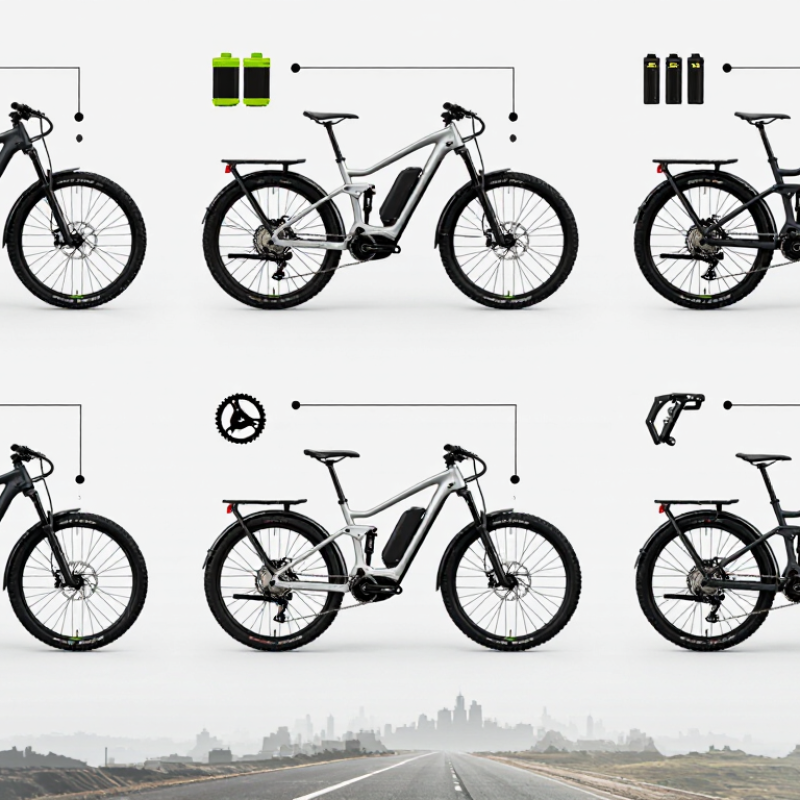
An SUV e-bike is a utility-focused electric bicycle, not a formally standardized category. Its defining idea is versatility: it should feel stable on rough paths while carrying everyday loads. Typical features include wide, high-volume tires, a reinforced frame, suspension, integrated lights, and mounts for racks or child seats. Details vary. A mountain bike may share some of these parts, but an SUV model usually gives more attention to comfort, luggage, and regular travel. More practical than flashy.
PeopleForBikes reported that U.S. e-bike sales rose 269% between 2019 and 2022. That figure describes the wider e-bike market, not SUV models specifically, but it shows why buyers increasingly compare different riding needs. On a test ride, notice how the bike behaves with a loaded rear rack, not just on smooth pavement. Check whether the tires grip loose gravel and whether the suspension absorbs curb edges without feeling sluggish. There is a trade-off: wider tires and heavier frames can add comfort and stability, but also increase weight and rolling resistance. The SUV label remains fuzzy, so compare the actual components and ride feel rather than relying on the name alone.
“SUV e-bike” is a market description, not a single globally standardized vehicle class. The specifications below are practical comparison benchmarks, not claims about any particular manufacturer or model.
| No. | Evaluation Dimension | Common SUV E-Bike Configuration | What Sets It Apart | What Global Buyers Should Verify |
|---|---|---|---|---|
| 1 | Overall design | Utility-oriented frame, wider tires, practical mounting points, and provisions for accessories. | Combines everyday commuting features with a more substantial, versatile build than a typical lightweight city e-bike. | Check frame fit, total weight, mounting compatibility, and whether the intended riding position suits daily use. |
| 2 | Tires and wheels | Many models use tires around 3.0–4.0 inches wide; exact sizes vary by design. | Wide tires can provide a larger contact area and added cushioning, but do not make a bicycle suitable for every off-road surface. | Confirm tire size, replacement availability, pressure guidance, puncture protection, and clearance for fenders. |
| 3 | Motor and local compliance | Hub-drive and mid-drive systems are both used. Permitted motor ratings and assistance behavior depend on the destination market. | Motor placement affects weight distribution, service requirements, and riding feel; legal classification affects where the bike may be used. | Request the continuous-rated power, assistance cut-off speed, throttle behavior, and documentation required in the destination country. For example, EU EPAC rules generally specify a 250 W maximum continuous rated power and assistance that cuts off at 25 km/h, subject to applicable conditions. |
| 4 | Battery capacity | Capacity is best compared in watt-hours (Wh). Calculate it as nominal voltage (V) multiplied by amp-hours (Ah). | A larger Wh figure means more stored energy, but does not guarantee a particular riding range. | Check rated Wh, cell and pack documentation, removable-battery design, charging time, replacement availability, and applicable transport requirements. |
| 5 | Real-world range | Range varies with battery energy, rider and cargo weight, terrain, temperature, speed, tire pressure, and assist level. | Range estimates are useful only when the test conditions and assist settings are clearly stated. | Ask for test conditions and, where possible, independent test results. Compare energy capacity and use case rather than relying on a single maximum-range claim. |
| 6 | Suspension | Some models have a suspension fork; others add rear suspension. Travel and adjustment features differ by model. | Suspension can improve comfort and control on uneven routes, while adding weight and maintenance needs. | Confirm whether the bike is front-suspension or full-suspension, the stated travel, service intervals, and availability of replacement parts. |
| 7 | Braking system | Disc brakes are common; hydraulic and mechanical systems are both available. | Braking performance depends on the complete setup, including rotor size, pads, tires, load, and maintenance—not just brake type. | Verify brake specifications, replacement-pad availability, suitability for the maximum permitted load, and conformity with destination-market requirements. |
| 8 | Frame, payload, and cargo | Frames may include rack and fender mounts, integrated racks, or step-through access. Payload limits are model-specific. | Utility details can make the bike more practical for commuting, errands, and carrying equipment. | Check the manufacturer’s maximum system weight, including rider, bicycle, and cargo; do not infer payload from frame appearance or rack design. |
| 9 | Electrical safety and certification | Battery, charger, motor, controller, and wiring should be assessed as a complete electrical system. | Safety and market-access requirements differ by country, and a certificate may apply only to specific components or configurations. | Request test reports and certificates relevant to the exact model and destination market. UL 2849 and EN 15194 are examples of e-bike standards used in particular markets; verify their scope and current local requirements. |
| 10 | After-sales support and parts | Support may include manuals, diagnostic guidance, warranty terms, and replacement parts for electrical and mechanical components. | A serviceable design and a reliable parts channel can matter as much as headline specifications over the bike’s lifespan. | Confirm warranty coverage by region, response times, parts lead times, service documentation, and which components can be serviced locally. |


An exceptional record of quality and service for 35+ years.
© 2026 Excell Battery Co. All rights reserved.Privacy Statement