What Is UHP Graphite Electrode and How Is It Used?

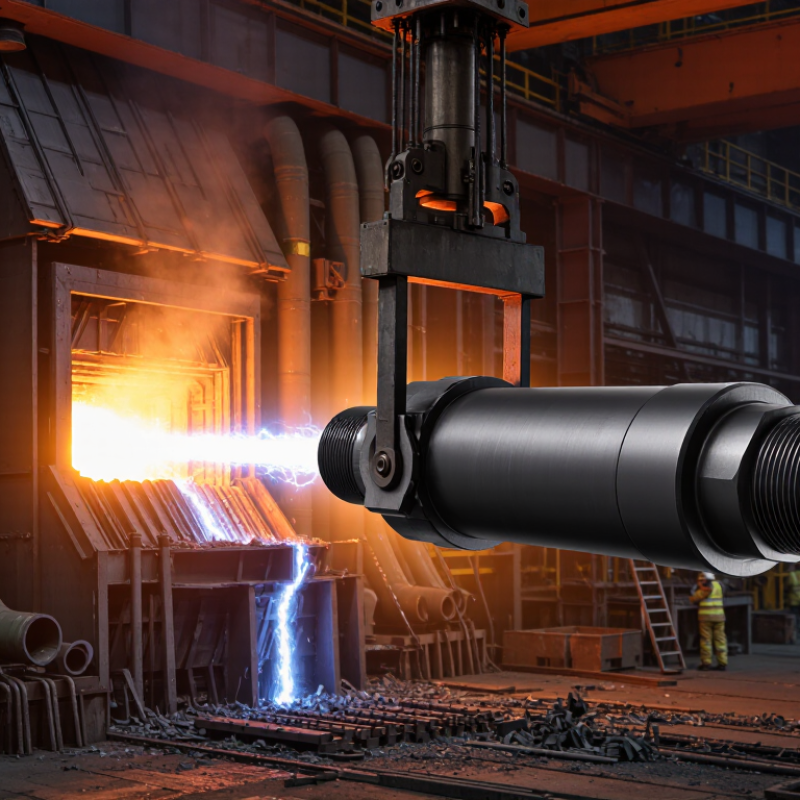
What is a UHP Graphite Electrode, and why does it matter inside an electric arc furnace? At a glance, it looks like a thick black cylinder. Under the surface, its performance depends on carefully selected needle coke, pitch, and high-temperature graphitization. It carries intense electrical current to create the arc that melts steel scrap. UHP means ultra-high power, but the label is not a guarantee of perfect operation. Actual results depend on diameter, current density, furnace practice, and electrode quality. In a working steel plant, the electrode connects through threaded nipples and advances as its length is consumed. Cooling water, roof movement, and changing scrap conditions can affect stability. Small cracks may grow when thermal shock, vibration, or oxidation acts on the graphite. That detail is often missed.

This guide explains the material, construction, and practical use of UHP Graphite Electrode products. Reliable selection begins with matching electrode specifications to furnace capacity and operating current. Technical data should be checked against manufacturer test values and recognized industry requirements. Engineers commonly review resistivity, bulk density, flexural strength, and oxidation behavior. These figures are useful, though they cannot replace site measurements. An electrode that performs well in one furnace may fail earlier in another. Operator habits matter. Loose connections, excessive current, or uneven furnace charging can increase breakage risk. Maintenance teams should inspect joints, cooling systems, and contact surfaces during planned stops. Careful monitoring reduces waste and helps protect furnace productivity. Still, no single specification solves every operating problem. Understanding the material, the furnace, and its limits is the practical starting point.
What Is UHP Graphite Electrode and How Is It Used?

Defining UHP Graphite Electrodes: Resistivity ≤5.5 μΩ·m and Ash ≤0.5%

What Is UHP Graphite Electrode and How Is It Used?

Defining UHP Graphite Electrodes: Resistivity ≤5.5 μΩ·m and Ash ≤0.5%

An ultra-high-power graphite electrode carries current into an electric arc furnace. In this article, UHP means electrical resistivity of 5.5 μΩ·m or lower and ash content of 0.5% or lower. Lower resistivity helps reduce voltage loss and limits heat buildup inside the electrode. Low ash also reduces unwanted mineral residue during melting. These values matter most during high-current steel production.

The World Steel Association reported that electric arc furnaces produced about 28.6% of global crude steel in 2023. This figure appears in World Steel in Figures 2024. As EAF output grows, electrode stability becomes more important. Operators use UHP electrodes for demanding furnace cycles, especially when high current density and rapid melting are required. In practice, nipple strength, thermal expansion, machining accuracy, and joint quality also affect performance. A perfect laboratory value does not guarantee reliable furnace operation.

Tips: Check resistivity and ash using consistent test methods. Review bulk density, flexural strength, and thermal expansion too. Store electrodes in dry, covered areas. Moisture can create cracking during heating. A rushed specification may look precise, yet still fail in the furnace. That is worth reviewing.

Raw Materials and Needle Coke: Building Electrodes for 25–40 A/cm²

What Is UHP Graphite Electrode and How Is It Used?

Ultra-high-power graphite electrodes carry 25–40 A/cm² into electric arc furnaces. Their performance begins with carefully selected raw materials, not only with final graphitization. Petroleum needle coke provides a highly ordered structure and relatively low thermal expansion. Coal-tar pitch binds the particles during forming and baking.

Needle coke must be crushed, screened, and blended into a controlled particle-size distribution. Fine particles fill voids, while larger grains support mechanical strength. The mixture is pressed into electrode shapes, then baked slowly. This stage removes volatile compounds and hardens the carbon body. Repeated impregnation can reduce open porosity, although excessive treatment may complicate production.

Very high current creates intense heat at the electrode tip and connection points. Low electrical resistivity helps limit energy loss. Low coefficient of thermal expansion helps prevent cracking during rapid temperature changes. Graphitization above 2,800°C develops the required graphite structure. Machined nipples then connect individual sections inside the furnace.

Quality control should include resistivity, bulk density, flexural strength, thermal expansion, and dimensional checks. Sulfur, nitrogen, ash, and moisture also deserve attention. A small variation in needle coke can change arc stability. The recipe is not perfectly universal. Furnace power, scrap mix, cooling conditions, and operator practice all influence electrode consumption. Some failures still appear after testing, which means production data must be reviewed instead of trusted blindly.

Manufacturing Steps: Forming, Baking, Impregnation, and Graphitization

What Is UHP Graphite Electrode and How Is It Used?

UHP graphite electrodes are conductive components used in electric arc furnaces. They transfer high electrical current to melt steel and other metallic materials. UHP means ultra-high power. Their performance depends on low electrical resistivity, strong mechanical structure, and controlled thermal expansion. Manufacturing quality matters greatly.

Production begins with selected needle coke and coal tar pitch. The coke is crushed, milled, and blended with pitch. Forming shapes this mixture into green electrodes through extrusion or vibration molding. Baking follows. The electrodes are heated slowly, often near 800–1,000°C, to remove volatile substances and harden the carbon body. Heating too quickly can create internal cracks.

Impregnation fills open pores with heated pitch. A second baking cycle may follow. This step improves density and reduces gas paths. Graphitization then raises the temperature to roughly 2,800–3,000°C. Carbon atoms rearrange into a graphite structure with better conductivity. Inspectors commonly check density, resistivity, flexural strength, dimensions, and thermal expansion. Traceable records support reliable production.

In an electric arc furnace, threaded joints connect electrode sections. Current passes through the electrode and forms an arc above the furnace charge. Operators monitor current, vibration, cooling, and consumption. Small defects can grow under severe heat. No process is perfect. Careful testing and practical furnace experience still guide final decisions.

What Is UHP Graphite Electrode and How Is It Used? - Manufacturing Steps: Forming, Baking, Impregnation, and Graphitization

Category Parameter Typical Data Unit Technical Description
UHP Electrode Overview Electrode classification Ultra-high power — UHP electrodes are designed for very high electrical loads in electric arc furnace steelmaking.
Typical allowable current density 25–40 A/cm² The actual operating value depends on electrode diameter, furnace design, cooling conditions, and the selected operating practice.
Common nominal diameters 300–700 mm Large-diameter electrodes are commonly selected for high-power furnaces, although available sizes vary by production line and application.
Primary raw materials Needle coke, coal-tar pitch — Needle coke provides a low-expansion carbon skeleton, while pitch acts as the binder and later forms additional carbon.
Main application Electric arc furnace steelmaking — The electrode carries current to the furnace arc and is consumed gradually during melting and refining.
1. Forming Material preparation Crushing, screening, and blending — Calcined needle coke is sized and blended with fine particles and binder pitch to obtain a uniform batch.
Mixing temperature Approximately 150–200 °C Heating keeps the pitch sufficiently fluid for uniform coating and mixing with the coke particles.
Forming method Vibroforming or extrusion — The plasticized mixture is shaped into a cylindrical green electrode with controlled dimensions and density.
Green electrode condition Unbaked carbon body — At this stage, the body contains volatile binder components and has not yet developed final mechanical or electrical properties.
2. Baking Typical peak baking temperature 800–1,000 °C Controlled heating carbonizes the pitch binder and removes volatile matter without causing excessive cracking.
Atmosphere Low-oxygen or protected — The baking furnace limits oxidation while the binder converts into a solid carbon matrix.
Heating profile Slow and controlled — A controlled temperature ramp reduces internal gas pressure, distortion, and thermal cracking.
Result after baking Porous carbon electrode — Open porosity remains after binder carbonization, so impregnation is normally required to improve density and strength.
3. Impregnation Impregnant Coal-tar pitch — Liquid pitch penetrates accessible pores in the baked body and is later carbonized during a second baking cycle.
Typical impregnation temperature Approximately 180–250 °C The pitch is heated to reduce viscosity and improve penetration into the electrode pores.
Process environment Vacuum followed by pressure — Vacuum removes air from the pores, and applied pressure drives the hot pitch into the carbon body.
Effect on properties Higher density and strength — Impregnation lowers open porosity and helps reduce electrical resistance and oxidation-related consumption.
4. Graphitization Peak graphitization temperature 2,600–3,000 °C Very high temperatures rearrange carbon into a more ordered graphite structure and remove remaining volatile elements.
Furnace atmosphere Protected from oxidation — The electrode is heated in an electrically controlled furnace with packing material or another protective arrangement.
Electrical resistivity after graphitization Approximately 4–7 µΩ·m Lower resistivity helps the electrode carry high current with reduced electrical voltage loss and heat generation.
Bulk density Approximately 1.60–1.75 g/cm³ Higher density generally indicates fewer accessible pores and improved resistance to mechanical and thermal damage.
Coefficient of thermal expansion Approximately 0.8–1.5 ×10⁻⁶/K Low thermal expansion helps limit thermal shock and dimensional stress during rapid furnace heating and cooling.
Finishing and Assembly Machining Turning and threading — The electrode is machined to its specified diameter, length, end geometry, and nipple-thread dimensions.
Joint system Tapered or cylindrical nipple connection — Joints connect electrode sections into a continuous column and must maintain electrical and mechanical contact.
Quality checks Visual, dimensional, physical, and electrical tests — Typical checks include dimensions, apparent density, resistivity, flexural strength, thermal expansion, and surface defects.
Optional surface protection Antioxidation treatment — Some electrodes receive a protective treatment to slow oxidation during service; treatment availability depends on the specification.
Use in an Electric Arc Furnace Electrical function Conducts current to the arc — The graphite column transfers electrical energy between the transformer circuit and the molten metal or furnace charge.
Main consumption mechanisms Oxidation, tip wear, breakage, and joint loss — Consumption is affected by furnace atmosphere, operating current, power input, cooling, charging practice, and electrode handling.
Operating temperature at the arc tip Several thousand degrees °C The arc zone is extremely hot; the exact electrode temperature varies along its length and changes with furnace operating conditions.
Key handling requirement Avoid impact and contamination — Careful storage, lifting, nipple protection, alignment, and tightening help prevent cracks, loose joints, and premature breakage.

Note: The values shown are representative industry ranges for UHP graphite electrodes. Actual specifications vary with electrode diameter, raw-material formulation, manufacturing route, test method, and operating conditions.

How UHP Electrodes Operate in EAFs Above 500 A/cm²

What Is UHP Graphite Electrode and How Is It Used?

Ultra-high-power (UHP) graphite electrodes deliver current into electric arc furnaces (EAFs). Their low electrical resistivity reduces energy loss during intense melting. High thermal conductivity transfers heat away from the arc zone. Low thermal expansion helps resist cracking during rapid heating and cooling. UHP grades typically use premium needle coke, controlled baking, graphitization, and precision machining. The result is a stable arc. Not a maintenance-free one.

The World Steel Association reported that EAFs produced about 29% of global crude steel in 2023. This share makes electrode reliability commercially important. The European Commission Joint Research Centre’s iron and steel BAT reference reports EAF electricity consumption commonly around 350–600 kWh per tonne. Actual demand changes with scrap quality, oxygen use, and furnace practice. Higher current may shorten melting time, but it also increases thermal and mechanical stress.

One technical point needs correction. A current density above 500 A/cm² is unusually high for a conventional EAF electrode. Operators should verify the unit, electrode diameter, and tap current. Current density equals current divided by electrode cross-sectional area. At demanding levels, engineers monitor voltage stability, nipple temperature, oxidation, and arc exposure. Operating data matters more than a headline figure. That uncertainty deserves attention.

What Is UHP Graphite Electrode and How Is It Used?

Ultra-high-power (UHP) graphite electrodes are designed for high-current electric arc furnace (EAF) operation. Their lower electrical resistivity and improved thermal-shock resistance allow higher current loading than standard- and high-power grades.

Typical current-density ranges vary with electrode diameter, furnace design, cooling conditions, arc stability, and operating practice. UHP electrodes commonly operate around 20–30 A/cm² in EAF service. The often-mentioned “500 A/cm²” value should be checked carefully because some technical references use A/in² or refer to a different electrical cross-section; it is not a typical bulk current-density value for an EAF graphite electrode.

Performance Measures: 1.5–2.0 kg Electrode Consumption per Ton of Steel

What Is UHP Graphite Electrode and How Is It Used?

UHP graphite electrodes are conductive components used in electric arc furnaces. They carry high current and create the arc that melts steel scrap. Their low electrical resistance and strong thermal-shock performance support intense furnace operation. Operators connect several sections with threaded nipples, then lower the column as the electrode tip wears.

A practical performance measure is 1.5–2.0 kg of electrode consumption per ton of steel. For every 100 tons melted, this equals roughly 150–200 kg of graphite. The figure is useful, but it is not a guaranteed industry standard. Scrap quality, furnace power, tap-to-tap time, and oxygen use can change the result. Shorter arc times help. Excessive sidewall oxidation does not.

Reliable tracking requires more than weighing delivered electrodes. The plant should record electrode length, joint losses, breakage, and consumption after each heat. A cracked nipple connection may increase usage without obvious tip wear. Poor alignment can also cause uneven contact and sudden column failure. This is where operating experience matters.

A furnace engineer may review electrode consumption alongside electricity, oxygen, and metallic yield. A low consumption number is not always positive if melting time increases. Likewise, a higher number may reflect difficult scrap or unstable arcs. The target should remain a controlled reference, not a perfect score. Real furnace data often needs another look.

An exceptional record of quality and service for 35+ years.