Outdoor Lighting is entering 2026 with more choices, but better technology does not always mean better design. Homeowners, architects, and facility managers are comparing energy use, weather resistance, control systems, and visual comfort. The U.S. Department of Energy reports that LED lighting can use at least 75% less energy than incandescent lighting and last much longer. These benefits explain why LED path lights, wall packs, bollards, floodlights, and architectural strips remain central to current projects.
Industry research points toward broader adoption of connected and efficient systems. The International Energy Agency’s energy-efficiency reports continue to identify efficient lighting as an important source of electricity savings. MarketsandMarkets also forecasts continued growth in the smart lighting sector, supported by sensors, wireless controls, and building automation. In practical terms, a 2026 garden may use warm-white path fixtures, motion-sensitive security lights, and app-controlled accent lighting around trees or façades. Small details matter.
Not every trend deserves a purchase.
Solar fixtures can reduce wiring, yet shaded gardens may limit their performance. Smart controls can improve convenience, although poor connectivity may frustrate users. Weather ratings should be checked carefully through recognized IP classifications under IEC 60529, especially for exposed installations. Dark-sky guidance also encourages controlled brightness and reduced upward glare.
This guide examines the leading Outdoor Lighting types expected to shape 2026 projects. It considers performance, installation conditions, maintenance, appearance, and long-term value. Forecasts are never perfect. Real properties differ, and a modest, well-aimed fixture may outperform an expensive system with excessive brightness.
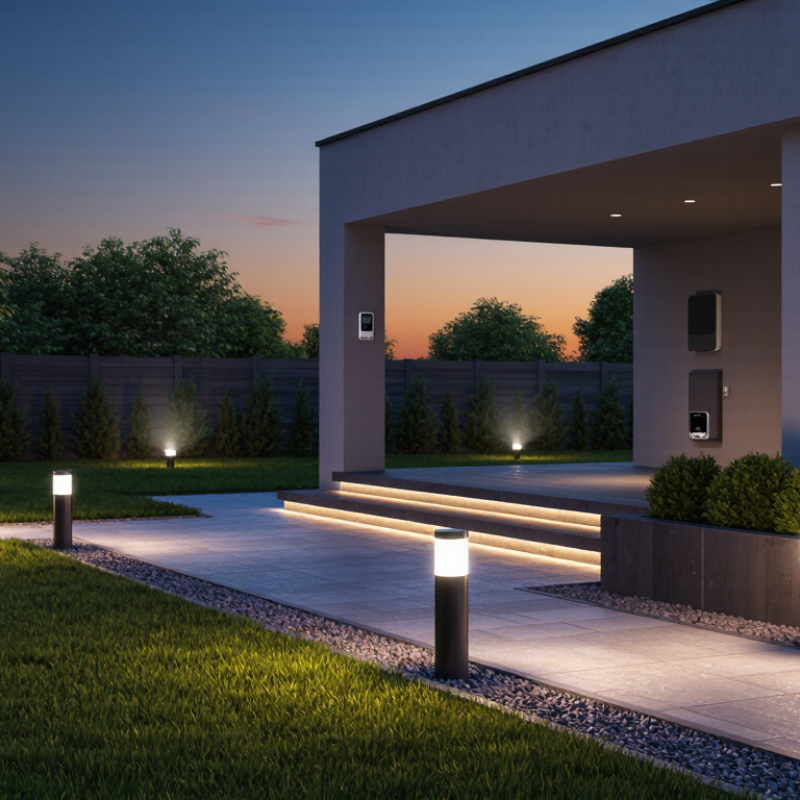
Classifying outdoor lighting in 2026 requires more than choosing bright fixtures. DOE efficiency guidance emphasizes useful lumens, wattage, and control performance. LED fixtures remain practical because they deliver strong output with lower energy use. Compare lumens per watt, not advertised brightness alone. A pathway fixture producing 500 lumens may waste energy if its beam spreads across the lawn.
Power source also changes installation and maintenance. Solar lights suit sunny walkways and remote garden corners. Their output may weaken after cloudy days. Low-voltage systems provide consistent light for patios, steps, and landscape edges.
Line-voltage fixtures support larger areas but require qualified installation and code checks. Battery-powered units offer flexibility, although frequent replacement can become an overlooked cost.
Tips:
Match controls to behavior. Use photocells for dusk-to-dawn security lighting, timers for predictable schedules, and occupancy sensors for occasional movement. Smart controls can reduce unnecessary runtime, but weak network coverage may limit reliability. In site reviews, I have found that over-lighting often creates glare instead of safety. That lesson is easy to miss. Choose warm color temperatures near seating areas, shield visible lamps, and confirm outdoor ratings before installation. Review seasonal performance after several months, because the original plan may not fit real weather, shadows, or household routines.
Outdoor lighting in 2026 will focus on efficient LEDs, precise control, and safer visibility. Popular types include path lights, wall fixtures, step lights, floodlights, and motion-activated security lights. Each type serves a different outdoor task.
The U.S. Department of Energy reports that LED lighting can use up to 75% less energy than traditional incandescent lighting. It can also last up to 25 times longer. These figures depend on the comparison, operating hours, temperature, and product quality. The 25× figure is useful, but it is not a promise.
A practical installation starts with the scene. A narrow path may need low, shielded fixtures to reduce glare. A driveway may benefit from wide, downward-focused illumination. Warm color temperatures can make patios feel comfortable, while neutral white light can improve visibility near steps and entrances. Always check weather resistance ratings, drainage, wiring protection, and control settings. Poor aiming still creates glare, even with efficient LEDs.
Smart controls can reduce unnecessary nighttime operation. Dimming and motion sensors help, but sensors may react to branches, pets, or passing vehicles. That can waste energy in a different way. Careful testing matters. A lighting plan should be adjusted after observing the property at night, not only from a daytime drawing.
What Are the 2026 Top Outdoor Lighting Types?
Solar Outdoor Lighting: Compare PV Output, Battery Runtime, and Weather Ratings
Solar outdoor lighting is becoming more practical, but performance depends on measurable details. A panel rated at 5 watts may produce about 20 watt-hours after four hours of strong sunlight. Clouds, shade, dirt, and winter angles reduce that figure. Rated output is not daily output.
Battery capacity needs equal attention. A 2,000 mAh battery at 3.7 volts stores roughly 7.4 watt-hours before conversion losses. A 1-watt lamp may run for six hours, not seven, because the circuit needs energy too. Check runtime at the brightness you will actually use. Bright mode often drains the battery quickly. That matters near gates and steps.
Weather protection is another practical test. An IP65 rating protects against dust and water jets, while IP67 generally allows temporary immersion. Neither rating guarantees reliable operation after poor installation. Mounting the light under a roof can improve service life, but it may reduce solar exposure. I have seen panels placed in attractive shade, where nighttime lighting looked fine for two days. Then the battery stayed weak.
Look for replaceable batteries, clear charging specifications, and independent weather testing. Motion sensors can save energy, although overly sensitive settings create unnecessary cycling. Solar lights are not maintenance-free. Wipe the panel every few months and inspect seals after severe weather. Performance claims still deserve a closer look.
In 2026, outdoor lighting choices will include LED fixtures, solar units, bollards, wall packs, and connected systems. LED remains practical because it delivers steady light with lower power demand. Solar lighting suits remote paths, but winter weather can reduce nighttime performance. Networked controls add another layer of measurable efficiency.
Start with a baseline. Record each fixture’s wattage, operating hours, and monthly kilowatt-hours for at least thirty days. Install photocells, timers, occupancy sensors, and dimming controls according to the site’s actual use. After installation, compare energy data under similar weather and traffic conditions. A parking area may dim after midnight, while a walkway needs brighter output during evening peaks. These control schedules should be tested, not assumed.
Experience shows that savings often depend on commissioning quality. A sensor aimed at a moving tree can create unwanted switching. Poorly adjusted dimming may also reduce safety or user confidence. Not every site wins. Measure maintenance calls, brightness complaints, and replacement intervals beside energy use. A reliable evaluation checks the meter and the people using the space. Technicians should review the data monthly, then adjust schedules carefully. Managers also need clear records, including the original baseline and every control change.
Illustrative estimated reduction in lighting electricity use compared with fixed-output operation.
Estimates assume scheduled dimming and occupancy- or daylight-based control where appropriate. Actual savings depend on operating hours, existing controls, site conditions, and control settings; these figures are scenario estimates, not measured results.
What Are the 2026 Top Outdoor Lighting Types?
Low-voltage pathway lights and motion-sensor fixtures will remain practical outdoor choices in 2026. Low-voltage systems usually operate at 30 volts or less under NEC Article 411. They suit walkways, steps, garden edges, and small patios. Their wiring is easier to manage, but installation still requires weather-rated equipment and protected connections. A loose connector beside wet soil can become a serious failure point.
Motion-sensor floodlights add security without running all night. The U.S. Department of Energy reports that LED lamps use at least 75% less energy and last up to 25 times longer than incandescent lamps. Sensors can reduce operating hours further, although savings depend on traffic, sensitivity, and placement. NEC rules require listed equipment and correct installation for the location. Wet-location ratings, grounding, GFCI protection where applicable, and secure cable routing deserve careful attention. Rules can vary with the installation.
Tips: Aim sensors across a walking path, not directly toward it. Keep fixtures away from sprinklers. Test the detection range at night. Start with a short timer, then adjust it. Remember, brighter is not always safer. Excessive glare can hide faces and disturb neighbors. Review the current NEC edition and local requirements before installation, because a familiar setup may still fail inspection.
| Outdoor lighting type | Typical use | Common power or control | Safety and installation considerations | Energy and practical notes |
|---|---|---|---|---|
| Low-voltage pathway lights | Walkways, garden edges, and steps | Often supplied by a 12-volt landscape-lighting system; photocells or timers may control operation. | NEC Article 411 covers low-voltage lighting systems operating at 30 volts or less. Use listed equipment and install it according to its instructions and applicable local code. | LED lamps can reduce electricity use compared with incandescent lamps. Aim light downward and avoid glare onto neighboring properties. |
| Motion-sensor security lights | Entrances, garages, and side yards | Mains-voltage or low-voltage fixture with an occupancy or motion sensor; some models also use a photocell. | Choose a fixture rated for its outdoor exposure. Follow the installation instructions, and have line-voltage wiring work performed by a qualified person where required. | A sensor can limit operating time when an area is unoccupied; actual savings depend on settings, use, and the light source. Set sensitivity and shutoff time to reduce nuisance activation. |
| LED flood and area lights | Driveways, yards, and broad exterior areas | Usually line-voltage LED fixtures; may be paired with a motion sensor, timer, or photocell. | Use a fixture listed for the location and exposure. Follow NEC requirements adopted by the local jurisdiction and the product’s mounting and wiring instructions. | The U.S. Department of Energy reports that LEDs use at least 75% less energy and can last up to 25 times longer than incandescent lighting. Select only the light output needed for the task. |
| Wall-mounted entrance lights | Front doors, patios, and exterior walls | Typically line-voltage LED fixtures; available with dusk-to-dawn or motion controls. | Select a fixture suitable for the specific wet or damp location. Keep seals, covers, and wiring entries installed as directed to maintain the fixture’s weather protection. | A downward-facing or shielded design can help direct light onto the entry area and limit unwanted upward light. |
| Step and deck lights | Stair risers, railings, and deck edges | Available as low-voltage systems or line-voltage fixtures; may be controlled by a timer or photocell. | Use products rated for their outdoor location and install them securely. Keep cables protected from damage and follow the manufacturer’s instructions for connections and placement. | Use even, low-glare illumination to make changes in level visible without shining directly into people’s eyes. |
| Bollard and post lights | Paths, driveways, and landscape borders | Available in line-voltage and low-voltage versions; some systems use photocells or timers. | Confirm the fixture and wiring method are suitable for the installation location. Protect underground wiring as required by the applicable code and installation instructions. | Space fixtures to provide useful path guidance while avoiding excessive brightness and unnecessary light spill. |
Code and energy note: NEC requirements depend on the edition adopted by the local jurisdiction and the details of the installation. Consult the locally adopted NEC, the authority having jurisdiction, and fixture instructions. DOE efficiency figures compare LEDs with incandescent lighting; actual performance varies by product and use.
An exceptional record of quality and service for 35+ years.
© 2026 Excell Battery Co. All rights reserved.Privacy Statement