Choosing the right ceiling system affects more than appearance. It influences fire performance, acoustics, maintenance, indoor comfort, and long-term operating costs. An Aluminum Ceiling Panel offers a clean, durable surface for offices, airports, hospitals, retail spaces, and public buildings. Its rigid profile can create precise lines, concealed services, and consistent visual rhythm across large areas.
Industry data supports careful material selection. The International Energy Agency reports that buildings consume about 30% of global final energy. Therefore, ceiling products should support efficient lighting, ventilation access, and responsible refurbishment. The International Aluminium Institute also reports that roughly 75% of all aluminium ever produced remains in use today. This reflects aluminium’s durability and strong recovery potential. The Aluminium Association states that recycling aluminium requires about 95% less energy than producing primary aluminium. That figure matters when project teams assess lifecycle impacts.
Still, aluminium is not automatically sustainable. Primary production can carry significant embodied carbon, and premium ceiling systems may cost more initially. That deserves honest attention. Recycled content, local sourcing, coating selection, and take-back programs should be checked during specification. In practical projects, panels also need stable suspension systems, accessible service zones, and finishes suited to humidity, cleaning chemicals, and frequent contact. ASTM and local building-code requirements should guide fire, load, corrosion, and installation decisions. A well-designed Aluminum Ceiling Panel system is not merely decorative. It can support serviceability, visual quality, and longer replacement cycles. The best choice depends on verified project conditions, not attractive samples alone.
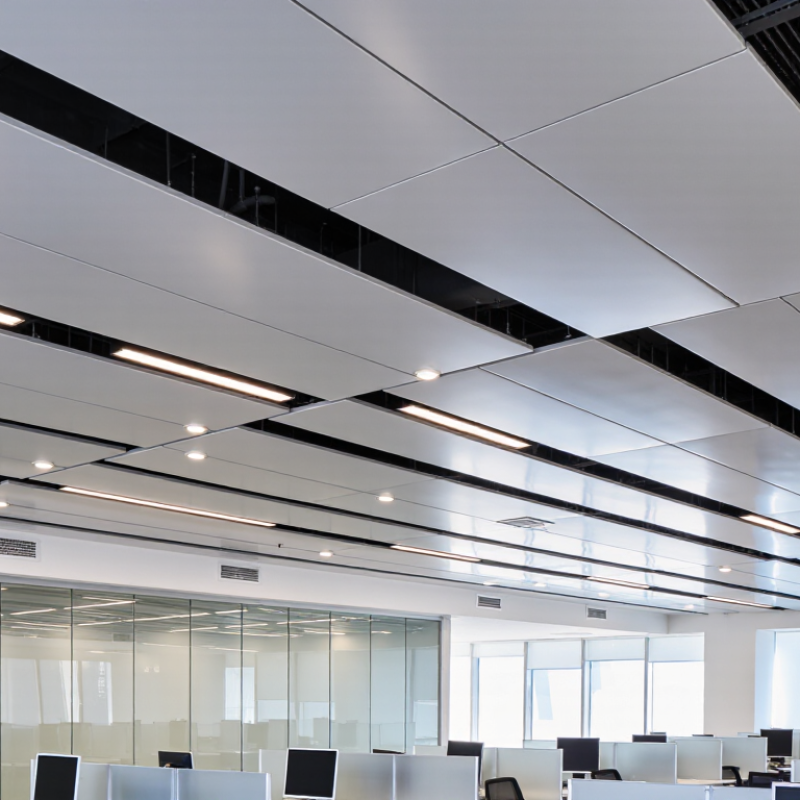
Aluminum ceiling panels
are lightweight ceiling surfaces made from formed or cut aluminum sheets. They may appear as flat panels, tiles, or narrow linear strips. A protective finish adds color, texture, and resistance to everyday moisture. Unlike plasterboard, aluminum does not absorb water easily. That matters in kitchens, corridors, bathrooms, and commercial interiors.
In practical projects, I have found panel systems useful when installers need clean access above the ceiling. Individual panels can often be removed for lighting, ventilation, or pipe maintenance. Their rigid surface also creates crisp lines under strong lighting. However, aluminum is not automatically perfect. Poorly supported panels may vibrate, dent, or show uneven joints. The ceiling grid, panel thickness, suspension method, and room conditions deserve careful review. Check tested fire, acoustic, and corrosion performance before specifying a system.
Tips: Measure the ceiling accurately. Leave service access where maintenance is expected. Request finish samples under the actual room lighting. A glossy surface can reveal small installation flaws. In humid areas, confirm the coating and edge protection. Ask an experienced installer to inspect the supporting structure before work begins.
Aluminum ceiling panels combine a clean appearance with practical access and durability. Their design begins with the room’s purpose. Offices may use smooth panels for reflected light, while restaurants often need perforated panels for sound control. Panel width, edge profile, color, and perforation rate should match the ceiling grid, lighting, sprinklers, and air diffusers. According to the 2023 UNEP Global Status Report for Buildings and Construction, buildings create about 37% of global energy-related emissions. Choosing reflective surfaces and recyclable materials can support a lower-impact design, although material selection alone cannot solve energy waste.
Installation requires accurate site measurements and a coordinated suspension layout. Installers first mark the finished ceiling level, then fix perimeter angles and hang the main carriers. Panels are clipped or laid into the grid, depending on the system. Access panels should align with valves, filters, and electrical points. Uneven hangers can create visible waves. Small errors become obvious under strong lighting. The International Aluminium Institute reports that roughly 75% of all aluminium ever produced remains in use today, supporting its long service potential. Still, poor ventilation or incompatible metals may cause corrosion. That detail deserves more attention.
Tips: Confirm the plenum depth before ordering panels. Check sprinkler clearances early. Use a laser level, not visual estimates. Leave removable panels near service equipment. A tidy drawing can still fail during installation, so conduct a full-size sample check before mass fitting.
Aluminum ceiling panels provide a practical balance of weight, durability, and design flexibility. A panel is light enough for faster handling above occupied spaces, yet rigid enough to create clean, straight ceiling lines. In offices, retail areas, and transport facilities, installers can lift panels with less effort than many heavier ceiling materials. That reduces fatigue during repetitive overhead work. It also helps when future access to wiring or ventilation is necessary.
Moisture resistance is another important benefit. Aluminum does not absorb water, so properly finished panels are less likely to swell, crack, or support mold growth. This makes them useful in kitchens, corridors, and humid interiors. However, I would not call them maintenance-free. Dust still settles on perforations, and a poorly detailed edge can collect grime. Regular cleaning remains necessary. The International Aluminium Institute reports that recycling aluminum uses about 5% of the energy required for primary production, representing roughly 95% energy savings. This supports material recovery when panels are removed responsibly.
Fire performance depends on the complete ceiling system, including coatings, backing materials, and suspension components. Project teams should verify tested classifications instead of relying on the word “metal.” The U.S. Green Building Council’s LEED framework also recognizes recycled content and responsible material documentation, although aluminum panels alone do not guarantee certification. Looks matter too. Perforation patterns can soften sound, while linear layouts can make a narrow room feel longer. Small specification errors, however, may affect acoustics or alignment more than expected.
Aluminum ceiling panels are common in airports, hospitals, offices, shopping centers, schools, and transport hubs. These spaces need durable surfaces that tolerate frequent cleaning and daily contact. In kitchens, bathrooms, and coastal buildings, aluminum resists moisture better than many fiber-based ceiling products. Perforated panels also help manage reverberation in busy halls. They are not silent by themselves. Designers usually add acoustic backing above the panels.
Renovation projects use them because individual panels can be lifted, replaced, or realigned without removing the entire ceiling. This matters beneath air-conditioning ducts, lighting systems, and fire-safety equipment. The 2024 Global Status Report for Buildings and Construction states that buildings consume about 32% of global energy and create roughly 34% of global carbon emissions. Lightweight ceiling systems may reduce installation effort, but their environmental value depends on recycled content, transport, and service life. The International Aluminium Institute reports that nearly 75% of aluminium ever produced remains in use today, supporting its long-term recyclability.
A common specification mistake is choosing panels only by appearance. Glossy finishes can reveal dents, fingerprints, and uneven lighting. In schools or food-service areas, stronger coatings and easier-clean surfaces may matter more. Details decide performance.
| Evaluation Dimension | What Aluminum Ceiling Panels Offer | Practical Benefit | Common Application Areas |
|---|---|---|---|
| Material Composition | Panels are manufactured from aluminum sheet or aluminum alloy, commonly using formed, folded, clipped-in, or lay-in designs. | Provides a rigid ceiling surface with a relatively low material weight compared with many mineral or steel-based ceiling products. | Commercial interiors, transportation facilities, public buildings, and residential projects. |
| Corrosion Resistance | Aluminum naturally forms a thin oxide layer that helps protect the underlying metal. Additional coatings can provide further surface protection. | Suitable for locations where humidity, condensation, or routine cleaning may occur. | Bathrooms, kitchens, swimming-pool surroundings, hospitals, food-service areas, and coastal buildings. |
| Moisture Performance | Aluminum itself does not absorb water and will not swell like moisture-sensitive fiberboard or some wood-based materials. | Helps maintain panel dimensions and appearance in damp indoor environments when the supporting system is correctly designed. | Washrooms, locker rooms, indoor pools, entrances, basements, and covered outdoor areas. |
| Fire Behavior | Aluminum is non-combustible as a metal; however, the complete ceiling assembly, including coatings, cores, insulation, and suspension components, must be assessed as a system. | Supports the use of metal ceiling systems in projects with strict fire-safety requirements, subject to applicable testing and building codes. | Airports, hospitals, schools, offices, shopping centers, and public circulation spaces. |
| Durability | Aluminum panels resist rot, insect damage, and many forms of surface deterioration. Performance depends on alloy, coating, installation, and maintenance. | Can provide a long service life with fewer replacement requirements than less durable interior finishes. | High-traffic corridors, retail stores, transport hubs, elevator lobbies, and institutional buildings. |
| Cleaning and Hygiene | Smooth coated or anodized surfaces are generally easy to wipe and can be maintained with routine cleaning methods recommended by the panel supplier. | Helps support cleanable interior surfaces and reduces the accumulation of dirt on the visible ceiling finish. | Healthcare facilities, laboratories, commercial kitchens, restaurants, schools, and food-processing support areas. |
| Design Flexibility | Panels are available in different shapes, sizes, perforation patterns, surface finishes, colors, and linear or modular layouts. | Allows the ceiling to combine visual design with lighting, ventilation, sprinkler, and inspection access requirements. | Corporate offices, hotels, retail interiors, cultural venues, airports, and modern residential spaces. |
| Acoustic Options | Perforated aluminum panels can be combined with acoustic fleece or other sound-absorbing backing materials. | Can improve sound absorption while preserving the appearance and cleanability of a metal ceiling system. | Open-plan offices, classrooms, conference rooms, libraries, restaurants, and transport terminals. |
| Maintenance Access | Clip-in, lay-in, and removable panel systems can be designed to provide access to services above the ceiling. | Simplifies inspection and maintenance of electrical, plumbing, air-conditioning, and fire-protection equipment. | Offices, hospitals, shopping centers, data-support areas, hotels, and public buildings. |
| Weight and Installation | Aluminum panels are generally lightweight, but the final installed weight includes the suspension grid, hangers, trims, insulation, and accessories. | May help reduce handling effort and support efficient installation when the structure and suspension system are properly engineered. | Renovation projects, suspended ceilings, large commercial spaces, and buildings with limited ceiling void access. |
| Recyclability | Aluminum can be recycled repeatedly when it is collected and separated through suitable recycling systems. | Supports material-recovery goals and can contribute to resource-efficiency strategies during renovation or demolition. | Green-building projects, commercial developments, public infrastructure, and refurbishment programs. |
| Outdoor Suitability | Exterior use requires products, coatings, fixings, drainage details, and wind-load design intended for outdoor exposure. | Can be used in protected exterior locations when the complete system is specified for weather and environmental conditions. | Canopies, covered walkways, station platforms, entrance soffits, balconies, and sheltered public areas. |
Aluminum ceiling panels are lightweight, durable, and suitable for kitchens, offices, corridors, and humid interiors. Their smooth surfaces collect less dust than many porous ceiling materials. Still, low maintenance does not mean no maintenance. Dust, grease, and moisture can slowly affect the panel finish and surrounding joints.
Begin with a soft microfiber cloth or a vacuum brush attachment. For ordinary dust, dry cleaning is usually enough. For greasy marks, use warm water with a small amount of mild, pH-neutral detergent. Wipe gently, then remove residue with a clean damp cloth. Dry the surface afterward. Do not use steel wool, abrasive powder, strong solvents, or rough sponges. They may leave fine scratches that become visible under ceiling lights.
Inspect the ceiling every few months, especially near ventilation outlets and cooking areas. Check for loose panels, stained edges, blocked drainage details, or moisture around fasteners. A small leak should not be ignored. It can damage insulation and create larger repair costs. Use a stable platform and keep electrical fixtures away from water during cleaning. Maintenance teams sometimes clean only the visible face, which is understandable but incomplete. Hidden joints and support areas deserve attention too. Follow the installation instructions because different coatings may require different cleaning methods.
An exceptional record of quality and service for 35+ years.
© 2026 Excell Battery Co. All rights reserved.Privacy Statement