As electric vehicles, energy storage systems, and industrial machines mature, battery management system design is becoming more specialized. The right architecture affects safety, usable capacity, charging speed, serviceability, and total ownership cost. In 2026, engineers will increasingly compare centralized, modular, distributed, passive-balancing, and active-balancing systems. Each type solves a different problem.
Gregory L. Plett, a recognized battery-management researcher and author, has described the BMS as “the brain of the battery.” This comparison remains useful because the system measures cell voltage, current, and temperature before making critical decisions. A centralized BMS can suit compact battery packs with short wiring distances. A modular BMS offers better scalability for larger electric vehicles and stationary storage. Distributed designs may reduce wiring, but they can increase communication and diagnostic complexity. Passive balancing is usually simpler and less expensive. Active balancing can transfer energy between cells, although its additional hardware requires careful validation.
Real battery packs rarely behave perfectly.
This overview examines the leading battery management system types expected to shape 2026. It considers architecture, balancing method, monitoring accuracy, thermal coordination, cybersecurity, maintenance, and integration with cloud-based analytics. These categories should not be treated as universal rankings. A low-cost battery may favor simplicity, while a high-energy pack demands redundancy and precise fault detection. Even experienced teams can underestimate installation conditions, aging cells, or communication failures. Therefore, selecting a BMS requires tested data, credible certification, and field experience—not marketing claims alone.
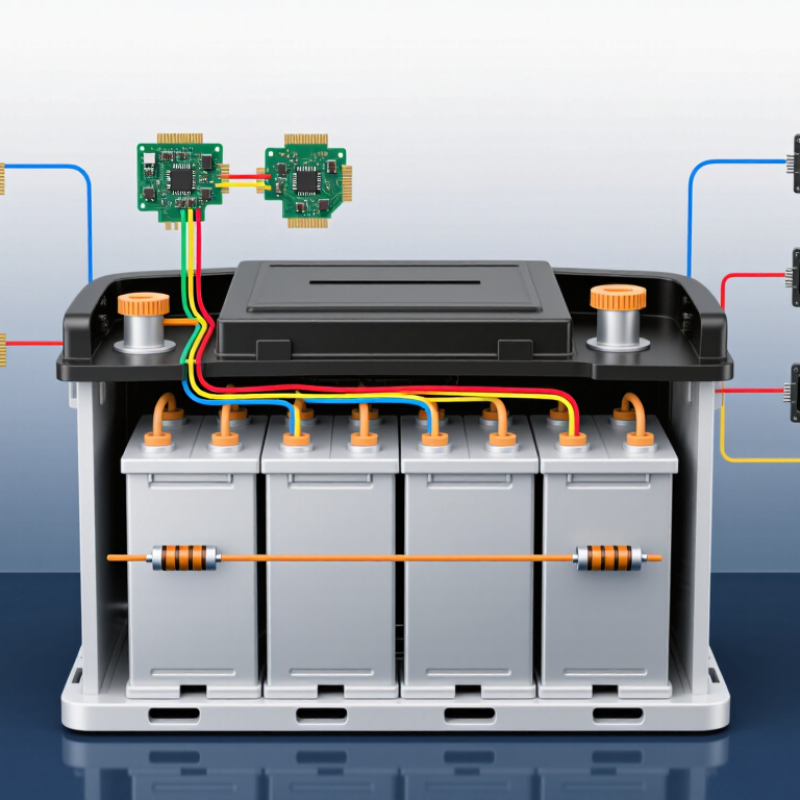
A Battery Management System (BMS) is the battery pack’s quiet control center.
It measures cell voltage, current, and temperature, then balances cells and limits unsafe charging or discharging. In a vehicle, it can react within milliseconds when one cell becomes unusually hot. That small decision protects range, battery life, and passengers.
The need is expanding quickly. The International Energy Agency reported that global electric-vehicle battery demand exceeded 750 GWh in 2023, rising about 40% year over year. Its Global EV Outlook 2025 also recorded more than 17 million electric-car sales in 2024.
More batteries mean more monitoring points. A centralized BMS suits compact packs, while modular and distributed systems can manage larger packs with shorter sensor wiring. The right architecture depends on pack size, cooling design, service access, and fault tolerance.
A BMS is not magic. It can misread aging cells or miss a sensor fault. That deserves attention.
A 2024 review from the U.S. National Renewable Energy Laboratory highlights temperature sensing, state estimation, and thermal-runaway detection as essential safety functions. The system should also record abnormal events, not merely shut down.
Battery prices are falling, but reliability cannot be treated as a cheaper feature. Engineers still need validated algorithms, calibrated sensors, and physical protection around every cell. Data from field testing often reveals weaknesses that laboratory cycles never show.
2026 Top Types of Battery Management Systems?
How Battery Management Systems Are Classified by Architecture
Battery management systems are commonly classified as centralized, modular, distributed, or wireless. A centralized BMS places measurement, balancing, and control circuits on one main board. It suits compact battery packs with short wiring paths. However, long cell harnesses can increase noise, voltage-drop errors, and assembly effort. The architecture is simple, but simplicity can become a limitation.
A modular BMS assigns monitoring boards to separate battery modules. A master controller then coordinates their data and protection decisions. This reduces harness length and supports larger packs with easier service access. Distributed systems extend this idea further, placing intelligence closer to individual cells or small groups. Wireless BMS designs remove much of the signal wiring. That can reduce weight and assembly points, but electromagnetic interference, cybersecurity, synchronization, and lost packets require careful validation. Wireless is not automatically better.
The International Energy Agency reported that global electric-vehicle battery demand exceeded 1 TWh in 2024, showing why scalable architectures matter. McKinsey’s battery supply-chain analysis projects battery demand could reach several terawatt-hours annually by 2030. Those figures do not select one architecture. They underline the need for fit-for-purpose engineering. A centralized design may serve a small industrial pack well. A modular or distributed design usually suits larger systems. The boundaries are not always clean. Hybrid designs combine wired modules with wireless local monitoring, but added interfaces create new failure points. Engineers should compare sensing accuracy, thermal performance, serviceability, cost, and fault isolation before choosing. Fancy architecture can still underperform.
2026 Top Types of Battery Management Systems?
Key Types of Battery Management Systems by Monitoring Structure
Battery management systems are increasingly defined by how they monitor cells, not only by battery size. The International Energy Agency reported that global electric car sales exceeded 17 million in 2024. That growth increases demand for accurate voltage, temperature, and state-of-charge monitoring.
Centralized BMS designs connect every cell sensor to one controller. They suit compact battery packs and simplify software updates. However, long wiring harnesses can add weight and create more connection points. Modular BMS designs divide the pack into sections. Each module measures nearby cells and sends summarized data to a central controller. This structure reduces wiring and supports easier service. It is common in larger vehicle and stationary storage systems.
Distributed BMS places monitoring electronics close to individual cells or small cell groups. This can improve signal quality and reduce harness length. It also increases electronics exposure to heat, vibration, and moisture. More components do not automatically mean better safety. Field evaluations still need careful fault testing. According to BloombergNEF’s 2024 battery price survey, average lithium-ion pack prices fell to 115 dollars per kilowatt-hour. Lower costs may encourage higher monitoring density, but maintenance can become harder.
No structure is perfect. Engineers should compare sensing accuracy, thermal layout, isolation needs, repair time, and communication reliability before selecting a design.
| Monitoring Structure | Measurement Location | System Architecture | Typical Pack Scale | Wiring and Communication | Balancing Capability | Main Advantages | Key Limitations | Typical Applications | Overall Suitability |
|---|---|---|---|---|---|---|---|---|---|
| Centralized BMS | All cell and pack measurements are connected directly to one central control board. | One controller performs cell-voltage monitoring, temperature measurement, protection logic, state estimation, communications, and balancing control. | Usually best suited to small and relatively compact battery packs with a limited number of cells. | Large point-to-point wiring harnesses run from the cells or modules to the central board. Communication is simple because there are few internal control nodes. | Passive balancing is common; active balancing can be integrated when the design supports the additional power electronics. | Low component count, straightforward software structure, simple pack-level control, and potentially low initial cost. | Harness length and connector count increase as the pack grows. Installation, serviceability, electromagnetic compatibility, and voltage-drop management can become more difficult. | Consumer electronics, small energy-storage packs, light electric mobility products, and compact industrial equipment. | Best for compact, cost-sensitive packs |
| Modular BMS | Each battery module has a local monitoring board that measures the cells within that module. | Several module-monitoring units communicate with a separate master controller or battery-control unit. | Well suited to medium and large packs composed of repeatable series or parallel modules. | Short local cell wiring is used inside each module. Inter-module communication commonly uses a wired daisy-chain or bus connection. | Balancing is normally performed locally within each module, reducing the need to route every cell connection to one central location. | Improved scalability, shorter cell-sense wiring, easier mechanical packaging, and better serviceability than a fully centralized design. | Requires multiple monitoring boards, coordinated software, module addressing, and reliable communication between local controllers and the master unit. | Electric vehicles, stationary energy storage, industrial battery systems, and medium-to-large traction batteries. | Best general-purpose structure for scalable packs |
| Distributed BMS | Cell or small-group monitoring electronics are positioned close to the cells, with measurements processed locally. | Multiple local sensing units share monitoring and protection tasks, while a central supervisory controller manages pack-level decisions. | Suitable for large, physically distributed, or highly customized battery systems. | Very short cell connections reduce harness complexity. Data is transmitted between local units and the supervisory controller through a communication network, which may be wired or wireless depending on the design. | Local balancing and protection functions can be implemented near the monitored cells, reducing high-current and long-distance wiring requirements. | Excellent packaging flexibility, reduced centralized wiring, strong scalability, and suitability for large or irregularly shaped battery assemblies. | Higher design and validation complexity, more communication nodes, greater cybersecurity requirements, and potentially more demanding fault diagnosis. | Large electric vehicles, heavy-duty transport, grid-scale storage, aerospace systems, and batteries with distributed physical layouts. | Best for large, complex, or space-constrained systems |
| Hierarchical BMS | Monitoring is divided into cell, module, sub-pack, and complete-pack levels. | Local monitoring units report to intermediate controllers, which then communicate with a supervisory battery controller. | Most appropriate for very large battery systems requiring multiple levels of control and diagnostics. | Short local sensing connections are combined with structured communication links between the lower-level controllers and the supervisory controller. | Balancing may be coordinated at cell or module level, while pack-level algorithms supervise energy, thermal, and safety limits. | Clear functional separation, high scalability, localized fault handling, and effective management of complex thermal and electrical zones. | More hardware and software layers increase integration effort, validation workload, communication dependencies, and maintenance requirements. | Large-scale energy storage, multi-pack vehicle platforms, industrial power systems, and battery installations with several independently managed sections. | Best for high-capacity and multi-level battery installations |
2026 Top Types of Battery Management Systems?
Battery management systems differ mainly in architecture, balancing method, and communication depth. A centralized BMS places sensing and control circuits on one board. It suits compact battery packs with short wiring paths and stable operating conditions. A modular BMS divides monitoring across several connected modules. This reduces harness length and supports medium-sized energy storage systems. A distributed BMS gives each cell group local measurement intelligence. It fits large electric vehicles and industrial packs where service access matters.
Functions also shape real-world performance. Passive balancing removes extra energy as heat through resistors. It is simple, economical, and suitable for closely matched cells. Active balancing transfers energy between cells, improving efficiency during long charge cycles. However, it adds control complexity and more failure points. Some systems provide only voltage, temperature, and current protection. Advanced systems estimate state of charge, aging, insulation condition, and remaining power.
Scalability depends on more than adding modules. The controller must handle timing, data quality, thermal limits, and fault isolation. A modular design can expand from a small cabinet to a container-sized system. Yet poor communication design may create delays or confusing fault reports. Field testing often reveals this gap. A system may look scalable on paper but struggle with uneven cell temperatures. Engineers should match BMS architecture to pack size, maintenance access, safety targets, and future expansion plans. Scale matters. But simplicity still has value.
How BMS types differ in functions, applications, and scalability
The chart uses a comparative 1–5 engineering index based on typical industry architecture characteristics: 1 indicates limited capability and 5 indicates strong capability. Centralized BMS designs are cost-effective for compact battery packs, while modular and distributed systems provide better scalability, redundancy, and serviceability for larger or more complex applications. Wireless BMS architectures can reduce wiring and support flexible pack layouts, but they require robust wireless reliability and cybersecurity measures.
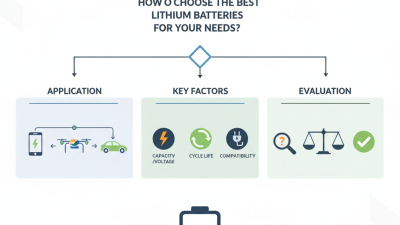
Choosing a battery management system in 2026 starts with the battery, not the software dashboard. Common options include centralized, modular, distributed, and wireless architectures. Centralized systems suit compact packs with short wiring paths. Modular systems work better when a pack contains many cells or separate compartments. Distributed designs reduce long sensor wires, but they demand careful communication testing.
Match the BMS to cell chemistry, voltage range, peak current, and thermal conditions. A system for lithium iron phosphate cells may not suit another lithium chemistry without revised voltage limits. Check balancing performance, state-of-charge accuracy, state-of-health tracking, and fault response time.
Small details matter. A loose temperature sensor near a busbar can distort protection decisions.
Practical selection also requires examining installation and maintenance. Confirm communication support, data logging, isolation monitoring, and protection against overcharge, deep discharge, and overheating. Ask for test records, operating limits, and relevant safety compliance evidence. A lower-cost system may look attractive, yet weak diagnostics can increase service time.
No checklist is perfect. Real packs age unevenly, and laboratory results may not reflect winter starts or dusty enclosures. Test the chosen system with representative cells, realistic loads, and repeated thermal cycles before approving production.
An exceptional record of quality and service for 35+ years.
© 2026 Excell Battery Co. All rights reserved.Privacy Statement